If winter feels like it’s personally attacking your Newfoundland’s coat, you’re not wrong.
Snow, slush, wet fur, dry air and a thick double coat that seems like it’s constantly wet create the perfect setup for mats, stink and coat damage for EVERY NEWFOUNDLAND that lives in a wintery climate.
Odin and Lou are groomed regularly by me and we struggle.
The good news?
Newfoundland winter grooming isn’t as challenging as it sounds and you don’t need to groom longer or more often.
You just need to focus on the right areas.

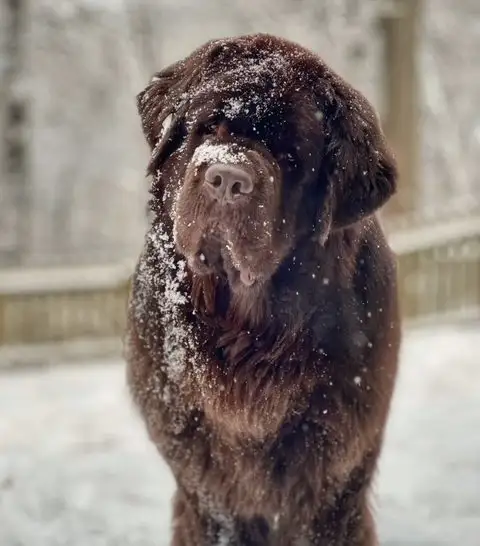
Why Winter is so Hard on a Newfoundland’s Coat:
- snow can melt into the coat
- moisture gets trapped close to the skin
- coats don’t air-dry easily
- most owners bathe less frequently during the winter
- the air is dry which creates a dry coat, dry skin and static
The result?
Moisture, friction and compression of the coat, which is exactly what causes mats, tangles and skin issues.
That’s why winter grooming is less about how often you groom and more about the areas you focus on.
The areas you should focus on are the same areas you should be focusing on all year round.
These are called High Priority Areas and there are 6 of them.

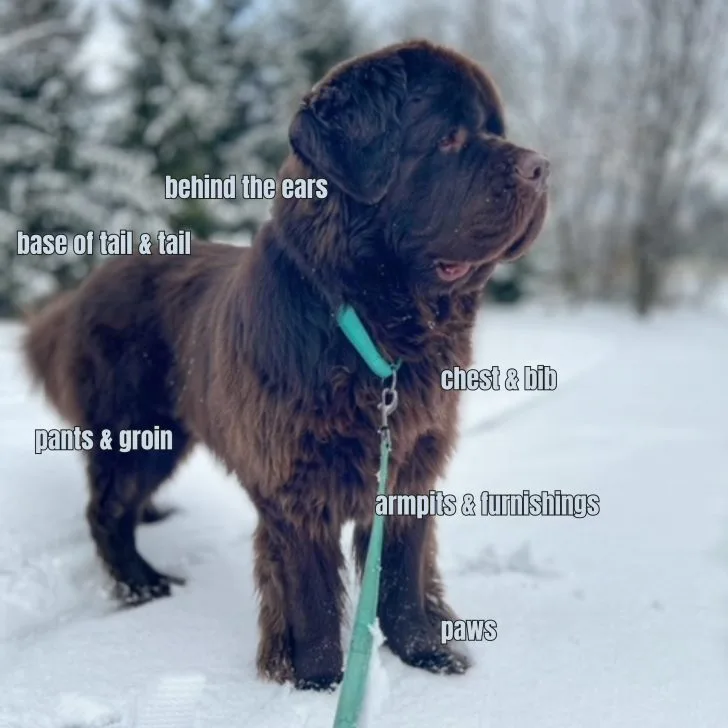
6 High Priority Areas You Should Focus On
1. Behind The Ears
One of the most common winter matting areas on a Newfoundland.
Why it’s a problem:
- constant friction from collars and shaking
- snow melts through the coat and into the warm skin
- thin hair tangles faster than the rest of the coat
What to do:
- check behind the ears daily with your fingers
- use a fine-tooth metal comb to catch tangles early
- detangle gently before brushing, don’t pull or yank.

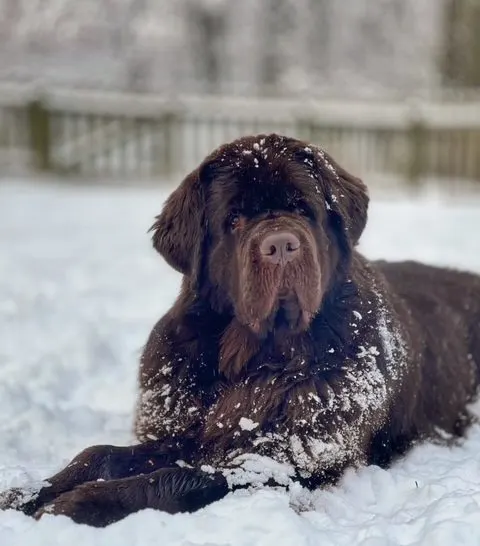
2. Armpits
Armpits are sneaky because the hair is usually thin in this area but this is a high-friction area that traps moisture during the winter.
Why it’s a problem:
- movement causes friction
- snow and slush collect here
- moisture doesn’t dry naturally here
What to do:
- physically look at this area instead of just brushing it
- focus on keeping this area dry
- spend a few minutes combing this area daily
This is an area where a few minutes will make a BIG difference.
3. Pants and Groin
The pants (the long feathering on the back legs) take a beating all winter.
Why winter wrecks this area:
- snow and slush cling to longer hair
- ice balls often collect here and pull on the coat
- the hair in this area is coarse and doesn’t dry well
What to do:
- gently break up ice balls, don’t pull them out.
- dry this area well with a towel, or preferably, a high-velocity dog dryer
- focus brushing here with a slicker brush or metal comb.
- if you only have time to brush one area, let this be it

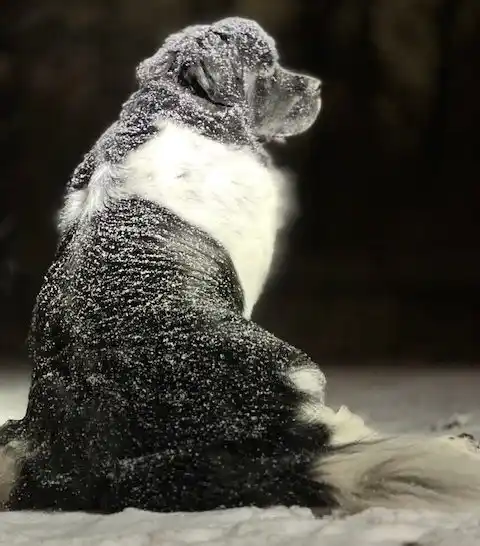
4. Chest and Bib Area
Drool and moisture make this a common problem spot.
Why this area struggles:
- drool + snow = constant moisture
- chest and bib hair is thick and traps moisture making it sometimes smell sour
- mats easily form close to the skin and often go unnoticed (believe me, I’ve seen many times on my own Newfs)
What to do:
- always dry this area as much and as often as possible
- lift the coat when drying so you’re getting down to the skin
- line comb this area instead of surface brushing
This area is one of the BIGGEST contributors to that yucky “winter smell”.
5. Tail Base and Tail Fringe
Often overlooked, but prone to winter matting.
The tail usually looks good until you take a closer look.
Why the tail mats in the winter:
- snow and slush collect here
- the tail is under the dog when they’re sitting or laying down
- mats form at the base because the tail moves a lot
What to do:
- check the entire tail, not just the fringe
- comb from the skin out
- dry after being in the snow
6. Paws
Newfie paws take a beating in the winter and they deserve more attention than they get.
Why this area is super important:
- ice melt and salt collect between the paw pads
- wet fur stays compressed to the skin
- irritation can lead to licking which can lead to more mats
What to do:
- check paws after every snowy outing
- keep paw hair trimmed but not shaved (leave some protection)
- always make sure to dry the paws as best as possible

Common Winter Grooming Problems For Newfoundlands
Newfoundland winter grooming problems that are seen the most often:
- Matting caused by trapped moisture. Yes, Newfoundlands have a waterproof outer coat but if the snow is not removed from the outer coat when the Newfie comes inside, the snow is going to melt into the coat. If the moisture sits there, it’s going to cause a problem… eventually.
- Strong wet dog smell. A wet dog smells worse than a dry dog.
- Skin irritation from damp coats. Skin irritation can lead to yeast or bacterial infections.
- Salt and ice buildup between paw pads. This can lead to mats that can lead to irritation that can lead to skin infections.
Winter Grooming Checklist:
Your winter grooming doesn’t have to be longer, it just has to be more efficient.
Winter grooming works best when you:
- focus on high-risk areas
- dry the coat as much as you can
- catch tangles early
- aim for consistency, not perfection
And let’s be real here, a Newfoundland is NEVER 100% dry. Almost dry is what most of us aim for:)
We hope that you like the products we featured in today’s post. Just so we’re clear, My Brown Newfies is a participant in the Amazon LLC Associates Program, an affiliate advertising program designed to provide a means for sites to earn advertising fees by advertising and linking to Amazon.com and other affiliate programs:)
Grooming Products I Use Often In the Winter
Newfoundland winter grooming products I reach for the most include:
- Long handle wooden comb
- Slicker brush
- Mushers Secret
- Skout’s Honor Probiotic Detangler Spray
- Cowboy Magic Detangler & Shine (works great on the pants and tail)
- Skout’s Honor Paw Spray
- Douxo Pads (for bacterial or yeast infections on the paws)
- K9 III Dog Dryer